Ihlara-Tal: Kappadokiens verborgene grüne Schlucht
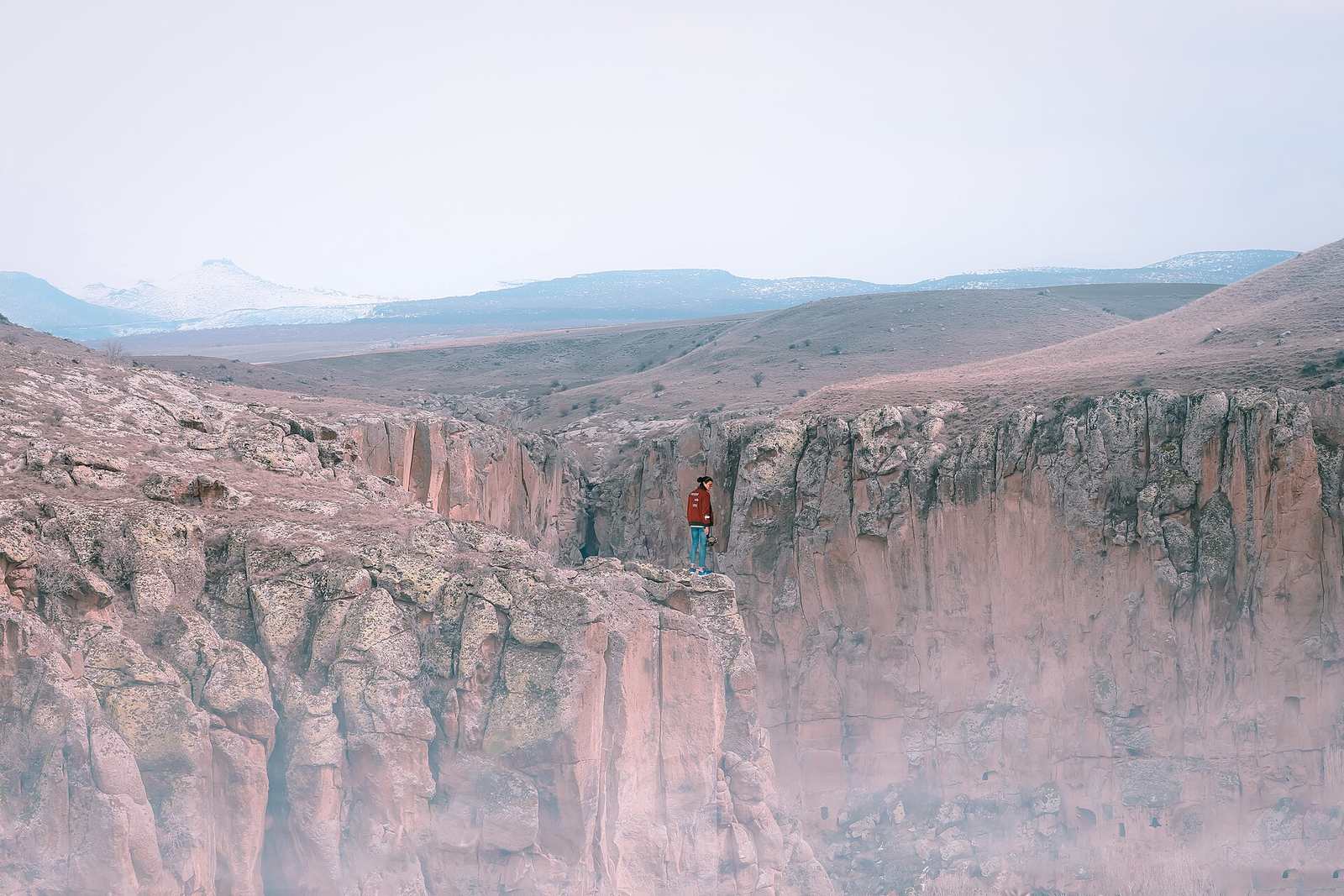
Das Ihlara-Tal (türkisch: Ihlara Vadisi) ist eine der überraschendsten Landschaften Kappadokiens – eine tiefe, von Bäumen beschattete Schlucht, die fast nichts mit dem trockenen vulkanischen Plateau ringsum gemeinsam hat. In der Provinz Aksaray, in der südwestlichen Ecke der Region Kappadokien in Zentralanatolien gelegen (Koordinaten etwa 38,2536° N, 34,3050° O), wurde das Tal über Tausende von Jahren vom Fluss Melendiz geformt, der eine rund 14 Kilometer lange Schlucht durch weichen vulkanischen Tuffstein bis zu einer Tiefe von etwa 100-150 Metern geschnitten hat. Wo der Rest Kappadokiens für hellen Fels und offenen Himmel berühmt ist, ist Ihlara eine kühle, grüne, von Pappeln gesäumte Oase, und genau dieser Kontrast macht sie zu einem der lohnendsten Halb- oder Ganztagesausflüge der Region.

Fakten auf einen Blick
| Lage | Provinz Aksaray, südwestliches Kappadokien, Zentralanatolien (38,2536° N, 34,3050° O) |
| Länge / Tiefe | ~14 km Schlucht, etwa 100-150 m tief |
| Geformt von | Dem Fluss Melendiz, der weichen vulkanischen Tuffstein durchschnitten hat |
| Bekannt für | In Fels gehauene byzantinische Kirchen mit erhaltenen Fresken, Wandern am Fluss |
| Eintritt | Kostenpflichtige Stätte; Müzekart gültig für türkische Staatsbürger und Einwohner |
| Beste Reisezeit | April-Oktober (kühl in der Schlucht selbst im Sommer) |
| Nächste Flughäfen | Nevşehir Kapadokya (NAV) und Kayseri (ASR), rund 1,5 Stunden von Göreme |
Warum das Ihlara-Tal sich vom Rest Kappadokiens unterscheidet
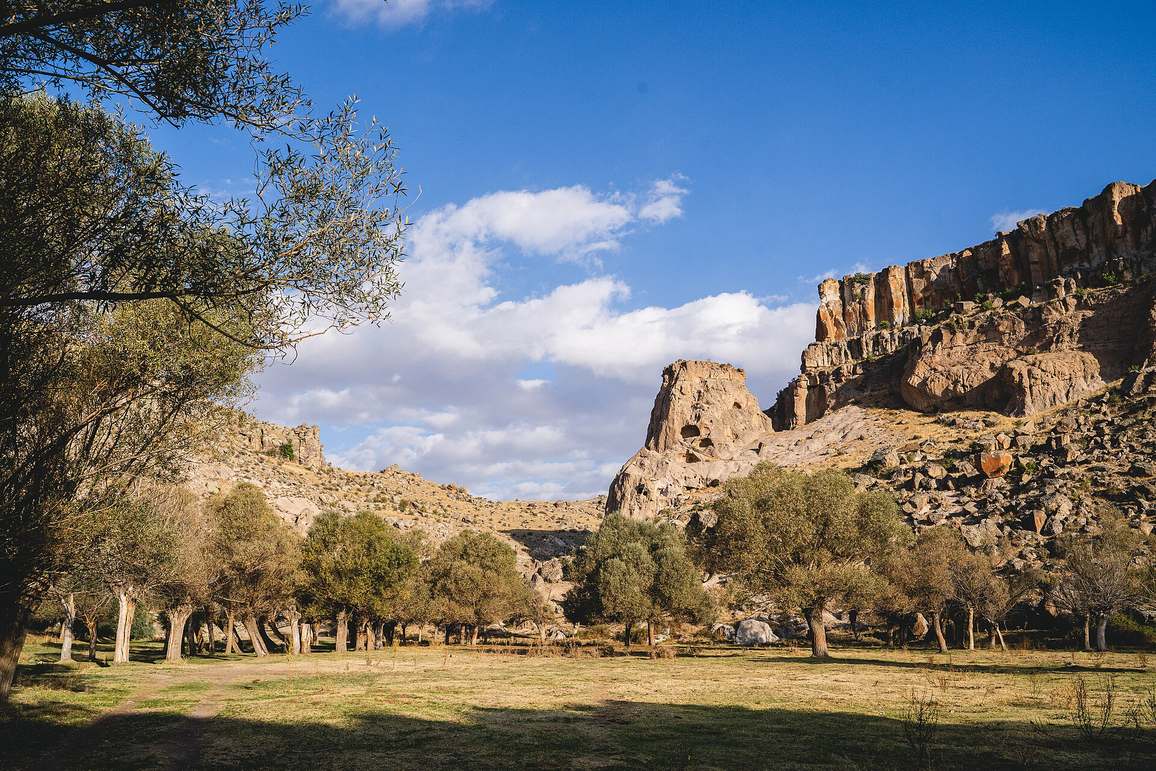
Die meisten Reisenden kommen nach Kappadokien in Erwartung von Feenkaminen, Höhlenhotels und Heißluftballons über einem trockenen, offenen Plateau – und Ihlara bietet etwas völlig anderes. Der Abstieg in die Schlucht (üblicherweise über eine Treppe mit rund 360 Stufen nahe dem Dorf Ihlara) führt in eine schmale, schattige Welt aus Pappeln und Weiden, fließendem Wasser und Vogelgesang, mit steilen Tuffwänden auf beiden Seiten. Der Temperaturunterschied ist sofort spürbar: Selbst an einem heißen kappadokischen Sommernachmittag bleibt der Talboden dank Baumkrone, Fluss und Tiefe der Schlucht selbst mehrere Grad kühler.
Genau dieses Mikroklima machte das Tal vor Jahrhunderten zu einer Zuflucht für byzantinische Mönchsgemeinschaften. Mönche und Eremiten schlugen Kirchen, Kapellen und Wohnräume direkt in den weichen vulkanischen Fels der Schluchtwände, um den natürlichen Schutz, das ganzjährige Wasser und die relative Abgeschiedenheit zu nutzen. Viele dieser in Fels gehauenen Heiligtümer sind bis heute erhalten, mit noch sichtbaren Fresken an Wänden und Decken – was das Ihlara-Tal zu einer der reichsten Ansammlungen byzantinischer Sakralkunst in ganz Kappadokien macht.
Die byzantinischen Felsenkirchen
Dutzende in Fels gehauene Kirchen liegen verstreut entlang der Schlucht, viele direkt vom Hauptwanderweg aus zugänglich. Zu den bekanntesten zählen Ağaçaltı Kilise (auch Daniel Pantonassa genannt), Yılanlı Kilise (die „Schlangenkirche", benannt nach einer Fresko-Darstellung von Schlangen, die mit Sündern assoziiert werden), Kokar Kilise und Sümbüllü Kilise. Jede hat ihren eigenen Charakter, von verblassten, aber noch lesbaren Freskenzyklen mit biblischen Szenen bis zu einfachen, herausgehauenen Zellen, die einst einzelne Mönche beherbergten. Für eine vollständige Übersicht jeder Kirche, was erhalten ist und worauf man achten sollte, siehe unseren eigenen Ratgeber zu den Felsenkirchen.
Wandern durch die Schlucht
Die Hauptattraktion des Tals ist für viele Besucher nicht nur die Kirchen – es ist die Wanderung selbst. Die klassische Route führt vom Eingang des Dorfs Ihlara nach Belisırma, ein schattiger Flussabschnitt von rund 3-4 Kilometern, der an mehreren der zugänglichsten Felsenkirchen unterwegs vorbeiführt. Wanderer mit mehr Zeit können weiter bis Selime gehen, nahe dem dramatischen Klosterkomplex Selime, wodurch sich die gesamte Wanderung auf fast die ganze 14-Kilometer-Länge des Tals erstreckt. Der Weg ist größtenteils flach und folgt dem Fluss, was ihn zu einer der zugänglichsten langen Wanderungen der Region macht, wobei der anfängliche Abstieg (und ein etwaiger Rückweg-Aufstieg) Treppen erfordert. Vollständige Routendetails, Zeitangaben und Geländehinweise finden Sie in unserem Ratgeber zum Wanderweg.
Was es sonst noch zu sehen gibt
Über die Kirchen und den Wanderweg selbst hinaus belohnt das Ihlara-Tal langsamere Erkundung: Picknick- und Teegartenplätze am Flussufer in Belisırma, wo Forelle eine lokale Spezialität ist, kleine Fußgängerbrücken über den Melendiz und das eindrucksvolle Kloster Selime, ein mehrstöckiger, in Fels gehauener Komplex am nördlichen Ende des Tals, der manchmal als Einfluss auf spätere Filmszenen im weiteren Kappadokien beschrieben wird. Siehe unseren Ratgeber Sehenswürdigkeiten für eine vollständigere Liste der Highlights entlang der Route.
Ihren Besuch planen
Die meisten Besucher erreichen das Ihlara-Tal als Teil eines breiteren Kappadokien-Reiseplans, häufig gebündelt in einer sogenannten „Green Tour" zusammen mit anderen Stätten im südlichen Kappadokien. Unabhängige Reisende mit Mietwagen können auch direkt zum Eingang des Dorfs Ihlara oder zum Selime-Ende fahren und in beide Richtungen wandern. Der Eintritt erfolgt über ein kostenpflichtiges Ticket vor Ort (Müzekart gültig für türkische Staatsbürger und Einwohner; ausländische Besucher zahlen eine reguläre Gebühr, am besten vorab auf muze.gov.tr bestätigt).
Vor der Abreise lohnt sich ein Blick in diese speziellen Ratgeber:
- Felsenkirchen – die byzantinischen Kirchen und Fresken, die man nicht verpassen sollte.
- Wanderweg – Routenoptionen, Entfernungen und Schwierigkeit.
- Sehenswürdigkeiten – Highlights jenseits der Kirchen und des Wanderwegs.
- Anreise – Flüge, Fahrten und Transferoptionen.
- Beste Reisezeit – saisonale Bedingungen und Besucheraufkommen.
- Karte – Orientierung für die Haupteingänge und Sehenswürdigkeiten.
Wer die Logistik lieber nicht selbst plant, findet bei einer Ihlara-Tal-Tagestour Transport, einen Guide und Stopps an den wichtigsten Felsenkirchen sowie dem Kloster Selime in einer einzigen Buchung gebündelt – eine bequeme Option für Reisende mit Basis in Göreme, Uçhisar oder anderswo in Kappadokien.
Eine Anmerkung zu verantwortungsvollem Besuch
Die Felsenkirchen des Ihlara-Tals sind jahrhundertealt, fragil und unwiederbringlich. Das Berühren von Fresken, Blitzfotografie in bemalten Kirchen oder das Klettern auf gehauene Strukturen beschleunigt Schäden, die nicht rückgängig gemacht werden können. Auf markierten Wegen zu bleiben, jeden Müll wieder mitzunehmen und die Kirchen als die historischen Stätten zu behandeln, die sie sind, hilft, das Tal für künftige Besucher intakt zu halten.
Für schnelle Antworten auf häufige Fragen siehe unsere Ihlara-Tal FAQ, oder stöbern Sie in der vollständigen Fotogalerie für weitere Ansichten der Schlucht, ihrer Kirchen und des Flussweges.