Pamukkale: Das Baumwollschloss der Türkei
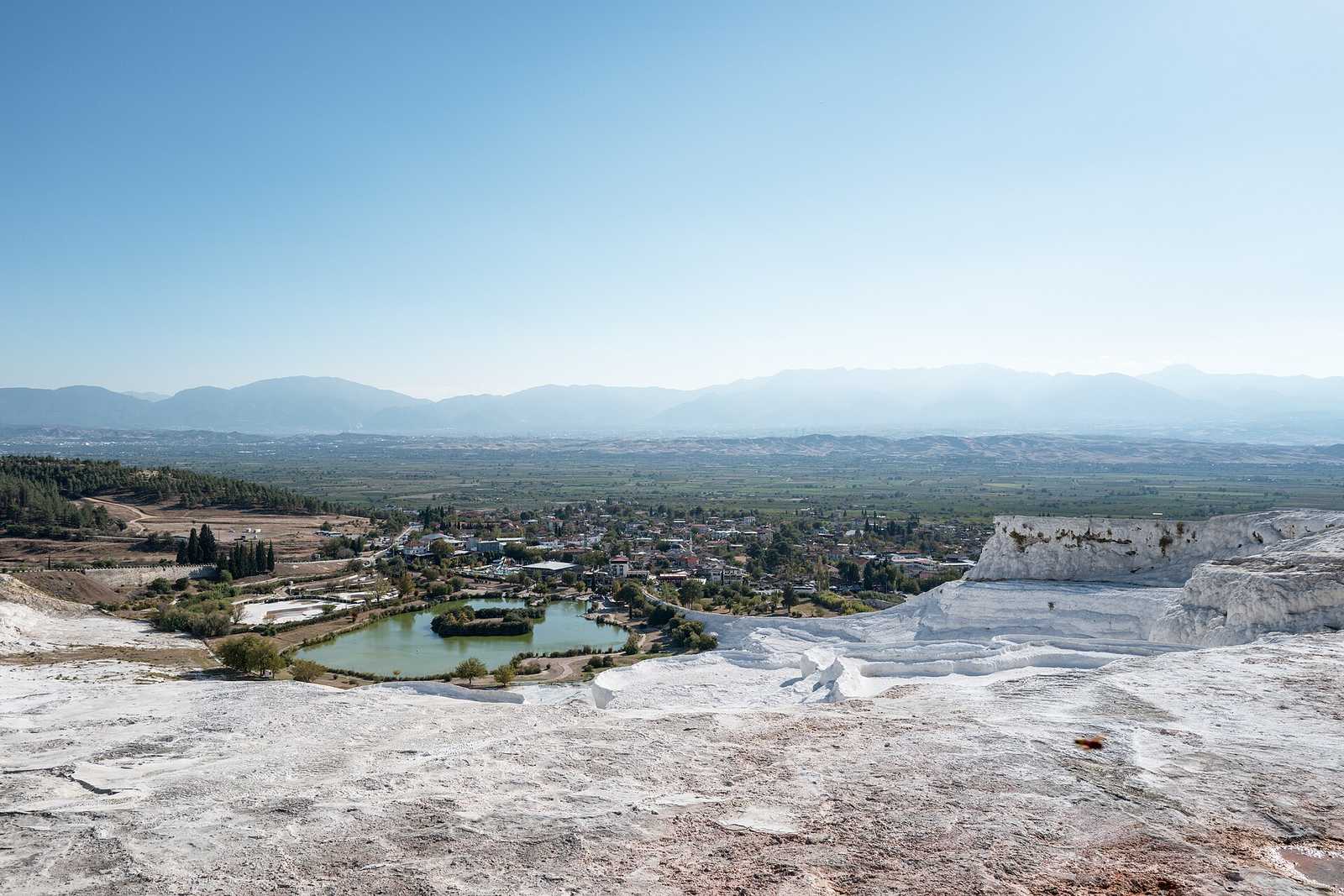
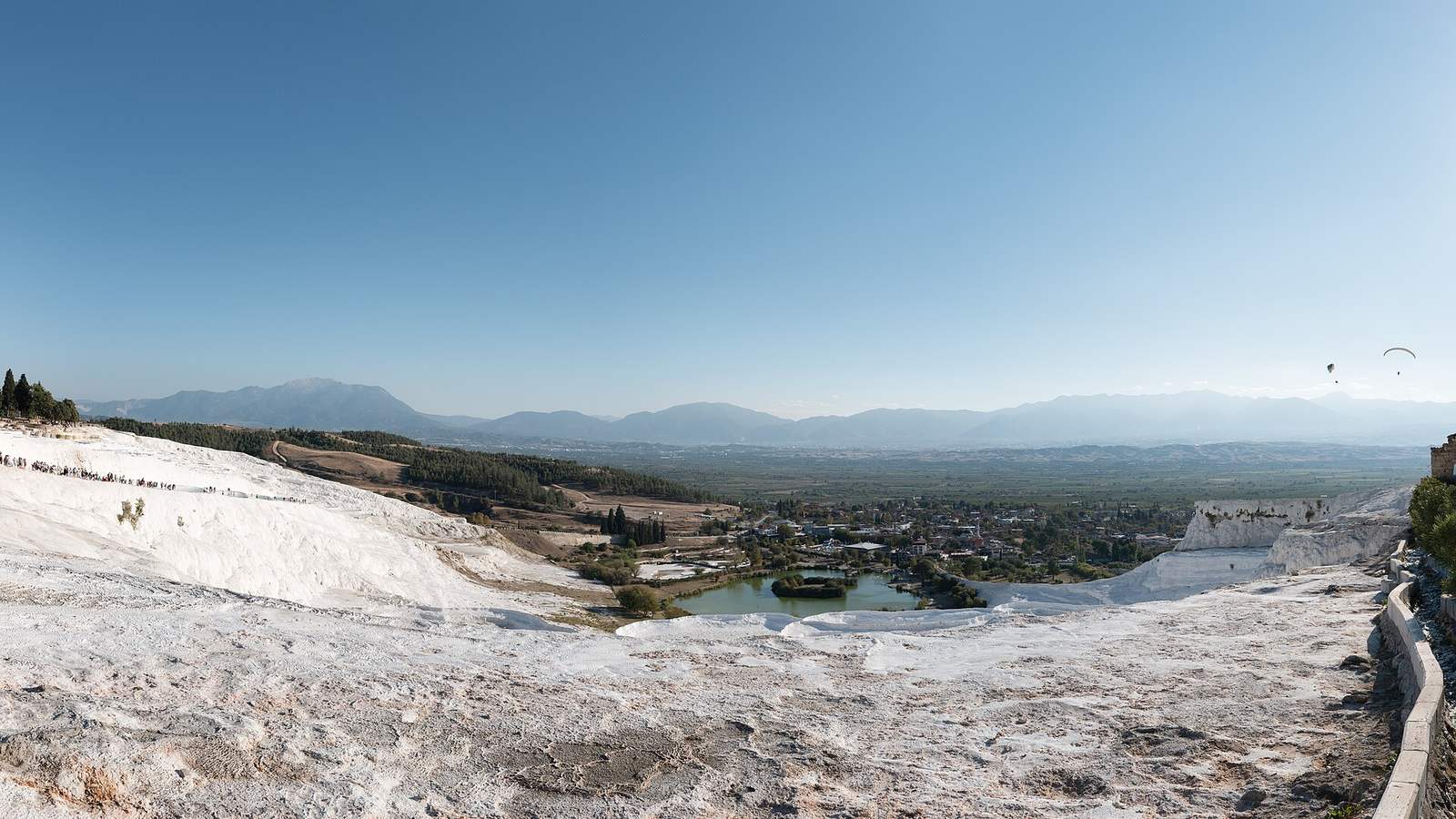
Pamukkale – auf Türkisch wörtlich „Baumwollschloss" – gehört zu den meistfotografierten Naturwundern der Türkei. Das Ziel liegt in der Provinz Denizli im ägäischen Teil der Türkei (Koordinaten 37,9203, 29,1206) und ist berühmt für seine kaskadenartigen weißen Kalksinterterrassen, die aussehen, als würden sie wie gefrorener Schnee einen Hang hinabfließen. Die Terrassen entstanden über Jahrtausende, als mineralreiches Thermalquellwasser den Hang hinabfloss und dabei Kalziumkarbonat ablagerte, das zu dem strahlend weißen Kalksinter (Travertin) erhärtete, den man heute sieht.
Direkt über den Terrassen thront Hierapolis, eine griechisch-römische Kurstadt, die dank ebendieser Thermalquellen aufblühte. Gemeinsam wurden Pamukkales Kalksinterterrassen und die Ruinen von Hierapolis 1988 als gemeinsames UNESCO-Weltkulturerbe eingetragen – eine Anerkennung sowohl der natürlichen Schönheit als auch der über 2.000-jährigen Geschichte des Ortes.
Kurzübersicht
| Lage | Provinz Denizli, ägäische Türkei (37,9203° N, 29,1206° O) |
| Entstanden durch | Kalziumkarbonat-Ablagerungen aus mineralreichem Thermalquellwasser |
| UNESCO-Status | Weltkulturerbe (mit Hierapolis) seit 1988 |
| Ticket (2026) | 30 € für ausländische Besucher, deckt Terrassen + Hierapolis ab; Preis auf muze.gov.tr prüfen |
| Öffnungszeiten | Etwa 08:00–21:00 Uhr (Fußgängereingang ca. 08:00–18:00 Uhr); saisonales „Nachtmuseum" ca. 19:00–23:00 Uhr |
| Beste Reisezeit | April–Juni und September–Oktober |
Warum Pamukkale einzigartig ist
Nur wenige Reiseziele vereinen Geologie, antike Geschichte und Thermalbaden so wie Pamukkale. Der Ort belohnt Besucher auf drei verschiedenen Ebenen:
- Die Kalksinterterrassen – eine Naturformation, die man barfuß durchquert, während warmes Wasser um die Füße plätschert.
- Die antike Stadt Hierapolis – ein bemerkenswert intaktes römisches Theater, eine ausgedehnte Nekropole, Tempelruinen und das geheimnisvolle Plutonium, ein Tor, das die Römer für einen Eingang zur Unterwelt hielten.
- Der Kleopatra-Pool (Antikes Becken) – die Gelegenheit, in 36 °C warmem Thermalwasser zwischen versunkenen kannelierten Marmorsäulen einer eingestürzten römischen Kolonnade zu schwimmen.
Da die Terrassen am Rand eines Plateaus liegen und über die Ebene von Denizli blicken, lohnt sich allein schon der Ausblick – besonders bei Sonnenuntergang, wenn sich der weiße Kalksinter goldfarben verfärbt.
Naturschutz: Warum man barfuß läuft
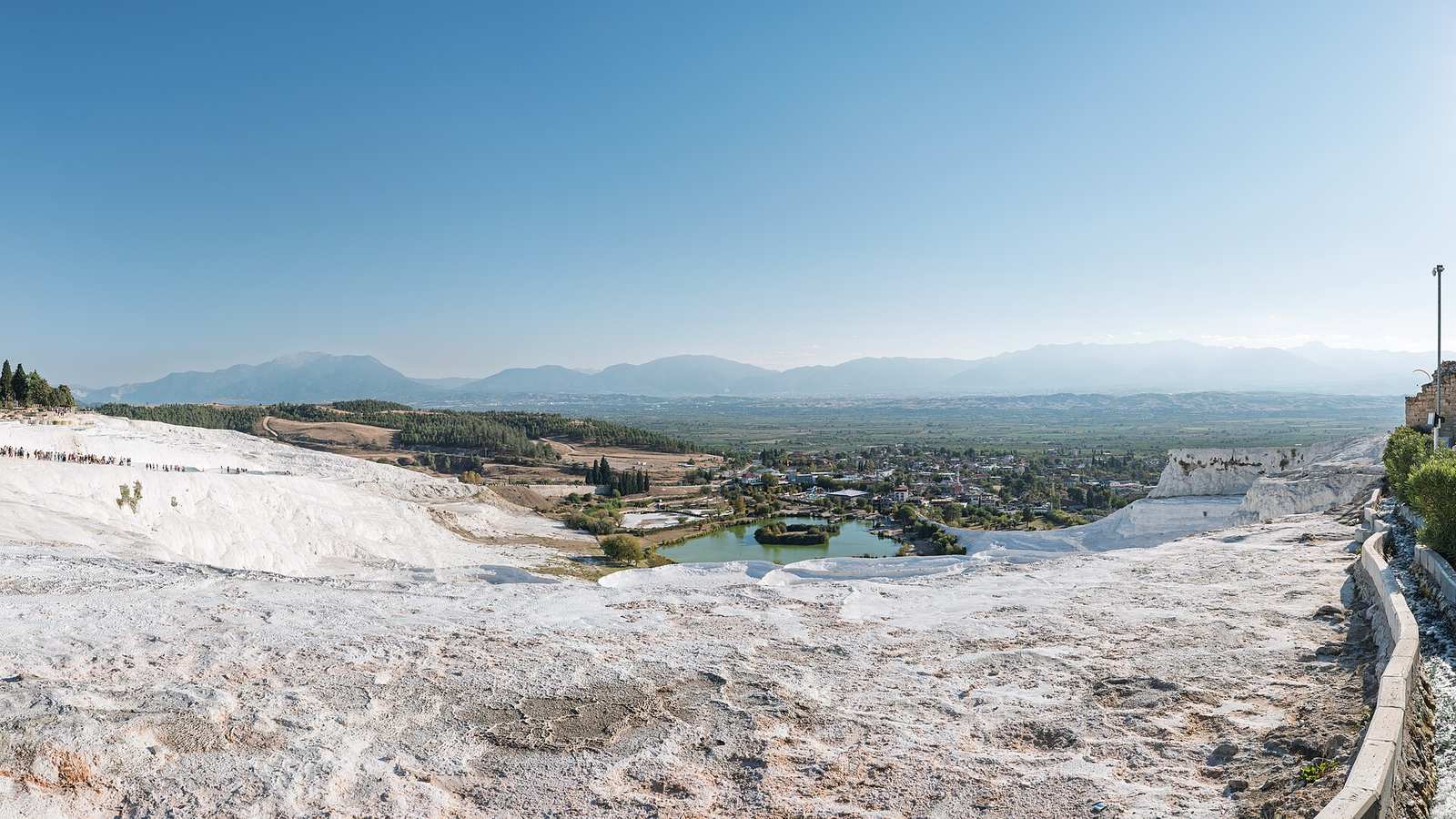
Pamukkales Terrassen sind eine lebendige geologische Formation und kein starres Denkmal – und sie sind empfindlich. Besucher müssen ihre Schuhe ausziehen, bevor sie den Kalksinter betreten, um die Oberfläche vor Erosion und Verfärbung zu schützen. Auch der Wasserfluss über die verschiedenen Terrassenabschnitte wird von der Verwaltung rotierend gesteuert, damit kein einzelner Bereich übermäßig beansprucht wird und sich die weiße Mineralkruste natürlich weiterbilden kann. Bitte auf den markierten Wegen bleiben – das Betreten trockener, inaktiver Terrassenabschnitte oder das Entfernen von Mineralablagerungen ist untersagt und schädigt eine Formation, die Jahrtausende zum Entstehen brauchte.
Wie ein typischer Besuch abläuft
Die meisten Besucher betreten das Gelände entweder durch das Südtor (nahe der antiken Stadt und dem Kleopatra-Pool) oder das Nordtor (nahe dem archäologischen Museum von Hierapolis und der Nekropole) und laufen dann über den Verbindungsweg durch die Terrassen hinab. Ein kompletter Besuch – Terrassen, Hierapolis-Ruinen und ein Abstecher zum Kleopatra-Pool – füllt bequem drei bis fünf Stunden. Viele Reisende verbinden Pamukkale mit einer Übernachtung in Denizli oder im Dorf Pamukkale oder besuchen es als langen Tagesausflug von İzmir, Antalya oder Fethiye aus.
Für einen genaueren Blick auf die einzelnen Bereiche siehe unsere Seiten zu den Kalksinterterrassen, dem Kleopatra-Pool und der antiken Stadt Hierapolis.
Ihren Besuch planen
Vor der Reise lohnt sich ein Blick auf die praktischen Details:
- Tickets und Eintrittspreise – aktuelle Preise, was enthalten ist, und Regeln für freien Eintritt.
- Anreise nach Pamukkale – Flüge, Busse und die Fahrt von Denizli aus.
- Beste Reisezeit – saisonales Wetter und Besucherströme.
- Karte und Lage – genaue Koordinaten und Orientierung vor Ort.
Wer die Logistik nicht selbst planen möchte, kann eine Pamukkale-Tour buchen, die Transport, Reiseleitung und Eintritt in einem Paket bündelt – eine beliebte Option für Reisende aus İzmir, Antalya oder Fethiye mit knappem Zeitplan.
Hierapolis: Die Stadt über den Terrassen
Hierapolis wurde im 2. Jahrhundert v. Chr. gegründet und entwickelte sich zu einer bedeutenden römischen Kurstadt, die Besucher anzog, die – ganz wie heutige Reisende – an die heilende Wirkung des Thermalwassers glaubten. Zu den erhaltenen Bauwerken zählen ein großes römisches Theater mit gut erhaltener Bestuhlung, eine der größten Nekropolen Kleinasiens mit Hunderten von Gräbern und Sarkophagen, der Apollontempel und das Plutonium, eine Höhlenöffnung, die einst mit giftigen Gasen und Unterweltmythologie in Verbindung gebracht wurde. Das archäologische Museum des Ortes, untergebracht in einer restaurierten römischen Thermenanlage, zeigt Statuen, Sarkophage und Fundstücke aus den Ausgrabungen. Mehr Details im vollständigen Hierapolis-Guide.
Fotos und weiterführende Informationen
Stöbern Sie in unserer Pamukkale-Fotogalerie für weitere Bilder der Terrassen, des Kleopatra-Pools und von Hierapolis, oder werfen Sie einen Blick in die FAQ für schnelle Antworten auf die häufigsten Besucherfragen.