Die Terrassen, die Pamukkale ihren Namen geben
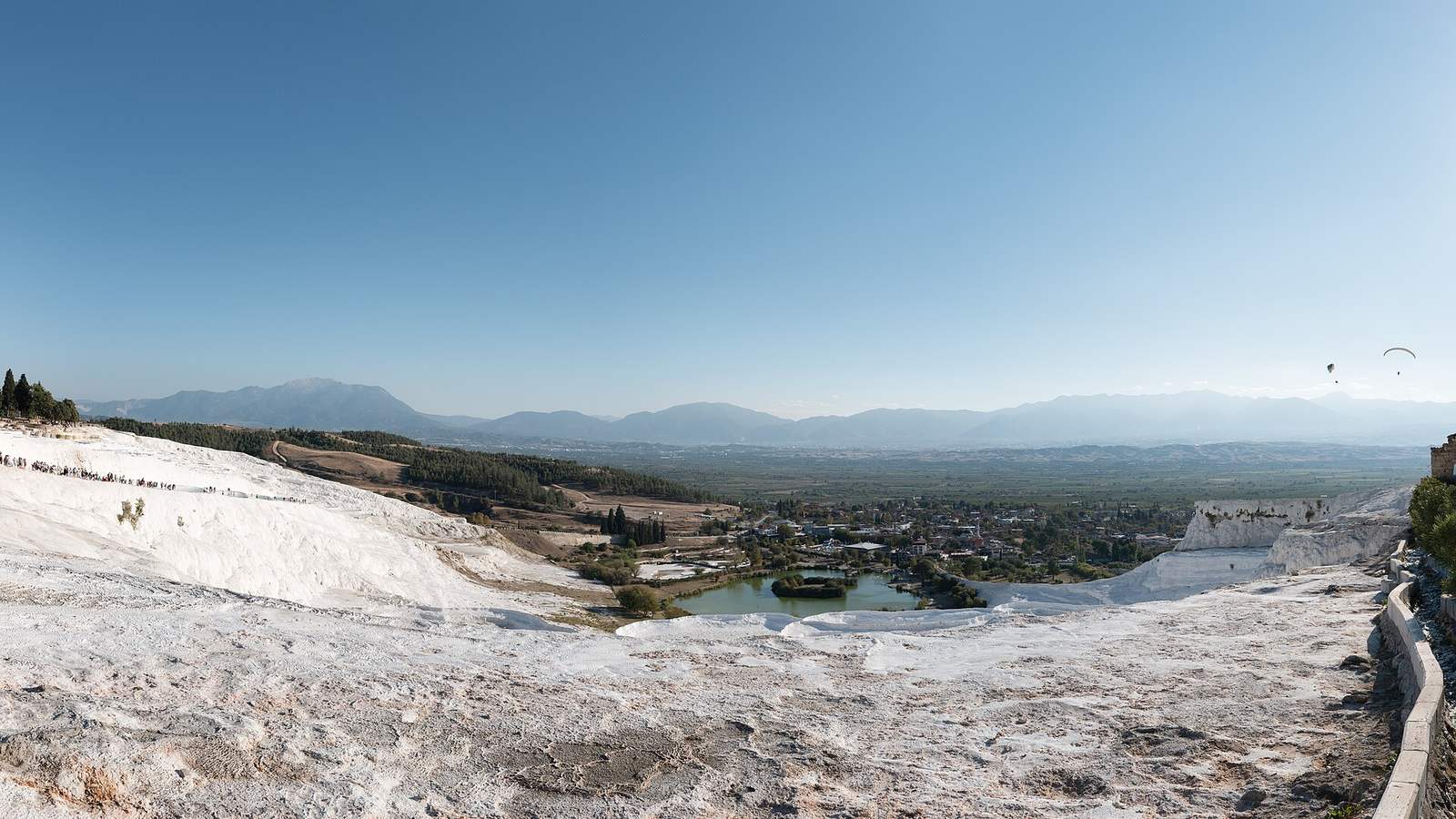
Pamukkale bedeutet auf Türkisch „Baumwollschloss", und der Name stammt direkt von den Kalksinterterrassen, die sich oberhalb des Ortes Pamukkale in der Provinz Denizli den Hang hinabziehen. Aus der Ferne erinnern die gestuften weißen Becken an Baumwollballen oder frischen Schnee vor der grünen Ebene von Denizli. Aus der Nähe betrachtet, handelt es sich um eine lebendige Mineralformation – ein UNESCO-Weltkulturerbe seit 1988, gemeinsam geschützt mit der antiken Stadt Hierapolis auf dem Plateau darüber.
Wie die Kalksinterterrassen entstanden
Die Terrassen sind das Ergebnis eines einfachen, aber äußerst langsamen Naturprozesses. Unter der Erde wird Wasser durch geothermische Aktivität erhitzt und nimmt beim Durchfließen des Kalksteinuntergrunds gelöstes Kalziumbikarbonat auf. Erreicht dieses mineralreiche Wasser die Oberfläche und fließt bergab, kühlt es ab und gibt Kohlendioxid an die Luft ab. Diese chemische Veränderung lässt Kalziumkarbonat ausfallen, das zu Travertin erhärtet – demselben Gestein, das in unzähligen römischen und osmanischen Bauwerken verwendet wurde.
Über Jahrtausende hat sich Schicht um Schicht dieser Mineralablagerung zu den gestuften Terrassen aufgebaut, die Besucher heute sehen, mit flachen, geschwungenen Becken, getrennt durch niedrige, abgerundete Ränder. Der Prozess ist noch aktiv: Wasser fließt weiterhin über Teile der Terrassen, und es bildet sich weiterhin neuer Kalksinter – deshalb beschreibt man den Ort besser als lebendige Formation denn als starres Denkmal.
Warum die Terrassen in verschiedenen Abschnitten unterschiedlich aussehen
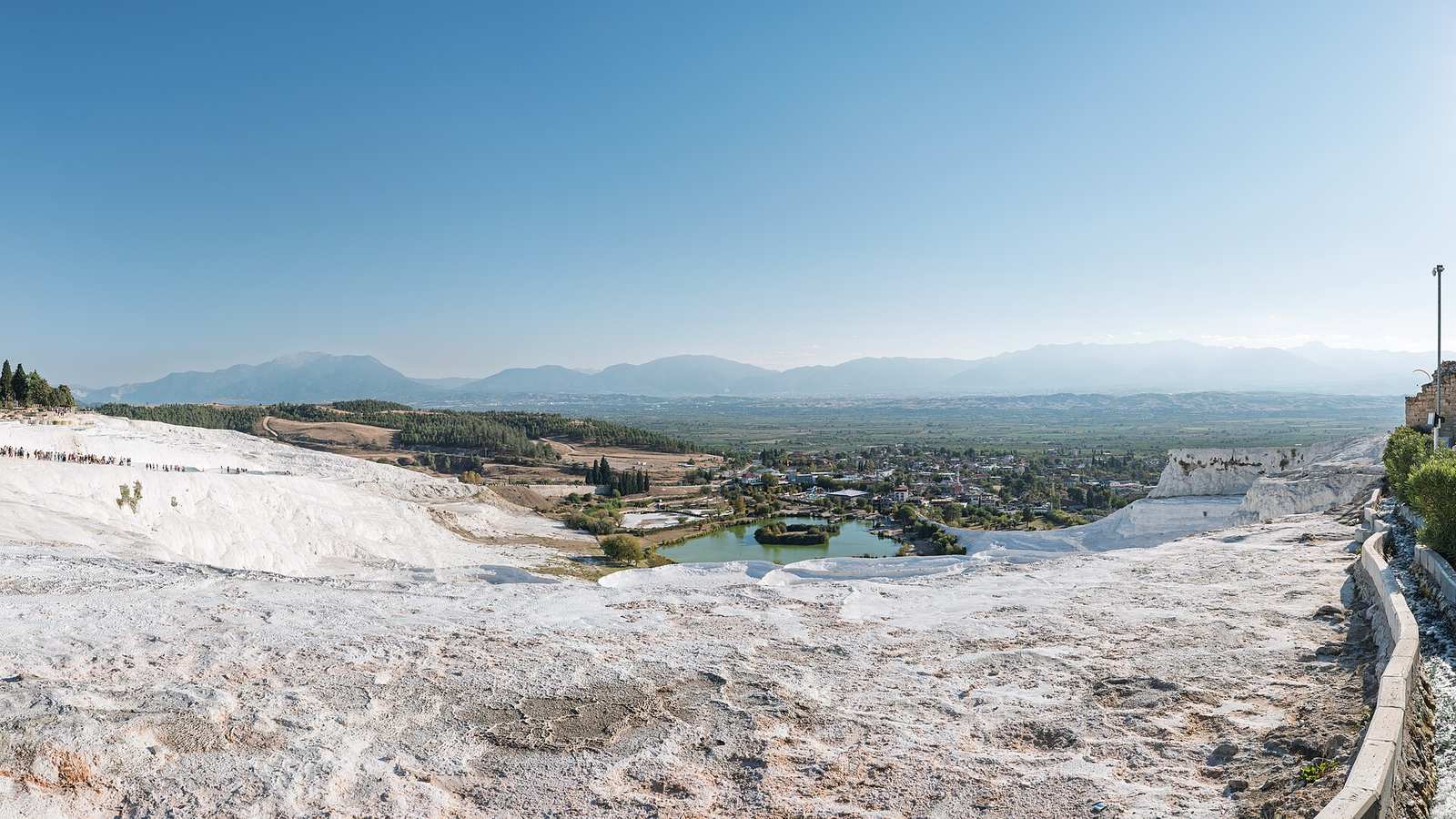
Nicht jede Terrasse führt gleichzeitig Wasser. Die Verwaltungsbehörde von Pamukkale lässt den Thermalwasserfluss nach einem Plan zwischen verschiedenen Terrassenabschnitten rotieren, leitet Wasser zu manchen Becken, während andere zeitweise austrocknen dürfen. Diese Rotation dient dem Naturschutz: Ein konstanter Wasserfluss über dieselben Terrassen würde Abnutzung und Mineralaufbau ungleichmäßig konzentrieren, während ruhende Abschnitte der Kalksinteroberfläche Zeit zur Erholung geben und die Formation insgesamt gleichmäßig weiterwachsen lassen.
Deshalb sind Erstbesucher manchmal überrascht, wenn sie einige Terrassen trocken, kalkig-weiß und für das Betreten gesperrt vorfinden, während benachbarte Becken mit warmem, flachem Wasser gefüllt sind. Beide Zustände sind Teil desselben verwalteten Systems, und die begehbaren Wasserbecken verändern sich im Laufe der Zeit.
Die Terrassen begehen: Die Barfuß-Regel
Besucher müssen ihre Schuhe ausziehen, bevor sie den Kalksinter betreten. Das ist keine bloße Höflichkeitsregel – es handelt sich um eine Naturschutzvorschrift, die durchgesetzt wird, um Schürfspuren, Verfärbungen und Abrieb zu verhindern, die Schuhsohlen sonst auf der weichen, nassen Mineraloberfläche verursachen würden. Rechnen Sie damit, Ihre Schuhe zu tragen (eine kleine Tasche ist hilfreich), während Sie den ausgewiesenen Weg hinabgehen.
Ein paar praktische Hinweise erleichtern den Barfußgang:
- Der Untergrund ist uneben, mit kleinen Riffeln und unterschiedlich tiefem Stauwasser, also achten Sie auf Ihre Schritte und nicht nur auf die Aussicht.
- Der Stein kann in nassen Abschnitten rutschig sein und in trockenen Abschnitten bei direkter Sommersonne warm bis heiß werden – der Wechsel zwischen beiden Bereichen ist normal.
- Nur der markierte Weg ist für Besucher geöffnet; die umliegenden trockenen, inaktiven Terrassen sind gesperrt, um sie vor unnötigem Fußverkehr zu schützen.
- Bringen Sie Wechselsocken oder ein Handtuch mit, falls Sie am Ende des Wegs sofort wieder Schuhe anziehen möchten.
Die besten Orte, um die Terrassen zu fotografieren
Das klassische Pamukkale-Foto entsteht von unten, mit Blick hinauf auf die gestuften weißen Terrassen vor blauem Himmel, oder von oben, mit Blick über die Becken hinab auf die Ebene von Denizli. Fotografen erhalten in der Regel die kräftigsten Farben und das weichste Licht am frühen Morgen oder in der letzten Stunde vor Sonnenuntergang, wenn flach einfallendes Licht den weißen Kalksinter golden und rosa färbt. Die Mittagssonne ist härter und lässt die Farbkontraste auf Fotos oft verblassen, sorgt jedoch dafür, dass das Wasser in den gefüllten Becken in leuchtendem Türkis erscheint.
Für einen breiteren Überblick über den Ort und seine Verbindung zu Hierapolis siehe die Pamukkale-Übersicht, und schauen Sie in unseren Guide zur besten Reisezeit für saisonale Licht- und Besuchermuster.
Terrassen versus Kleopatra-Pool
Es lohnt sich, den Unterschied zwischen den Kalksinterterrassen und dem separaten Kleopatra-Pool (Antikes Becken) zu verstehen. Die Terrassen sind flache, natürliche Mineralbecken, die man barfuß im Rahmen des regulären Eintrittstickets durchquert – hier wird nicht geschwommen. Der Kleopatra-Pool ist ein echtes Schwimmbecken zwischen versunkenen antiken Marmorsäulen und erfordert ein eigenes, separates Ticket. Vollständige Details, einschließlich aktueller Preise, finden Sie auf unserer Ticketseite und in unserem eigenen Kleopatra-Pool-Guide.
Verantwortungsvoll besuchen
Da die Kalksinterformation empfindlich ist und sich nur langsam regeneriert, tragen ein paar einfache Verhaltensweisen viel bei: auf dem markierten Weg bleiben, sich in den nassen, geöffneten Abschnitten aufhalten, das Berühren oder Abkratzen der Mineraloberfläche vermeiden und keine Steine oder Ablagerungen als Souvenir mitnehmen. Diese Terrassen brauchten Jahrtausende, um zu entstehen, und die Regeln, die an einem belebten Tag einschränkend wirken können, sind genau das, was Pamukkale so aussehen lässt wie auf Fotos, die Jahrzehnte auseinanderliegen.
Wer lieber mit einem einheimischen Reiseleiter erkunden möchte, der die Geologie erklärt und die besten Wegabschnitte zeigt, kann eine Pamukkale-Tour buchen, die Eintritt und Transport von İzmir, Antalya oder Fethiye aus einschließt.