The White Beaches of Lake Salda
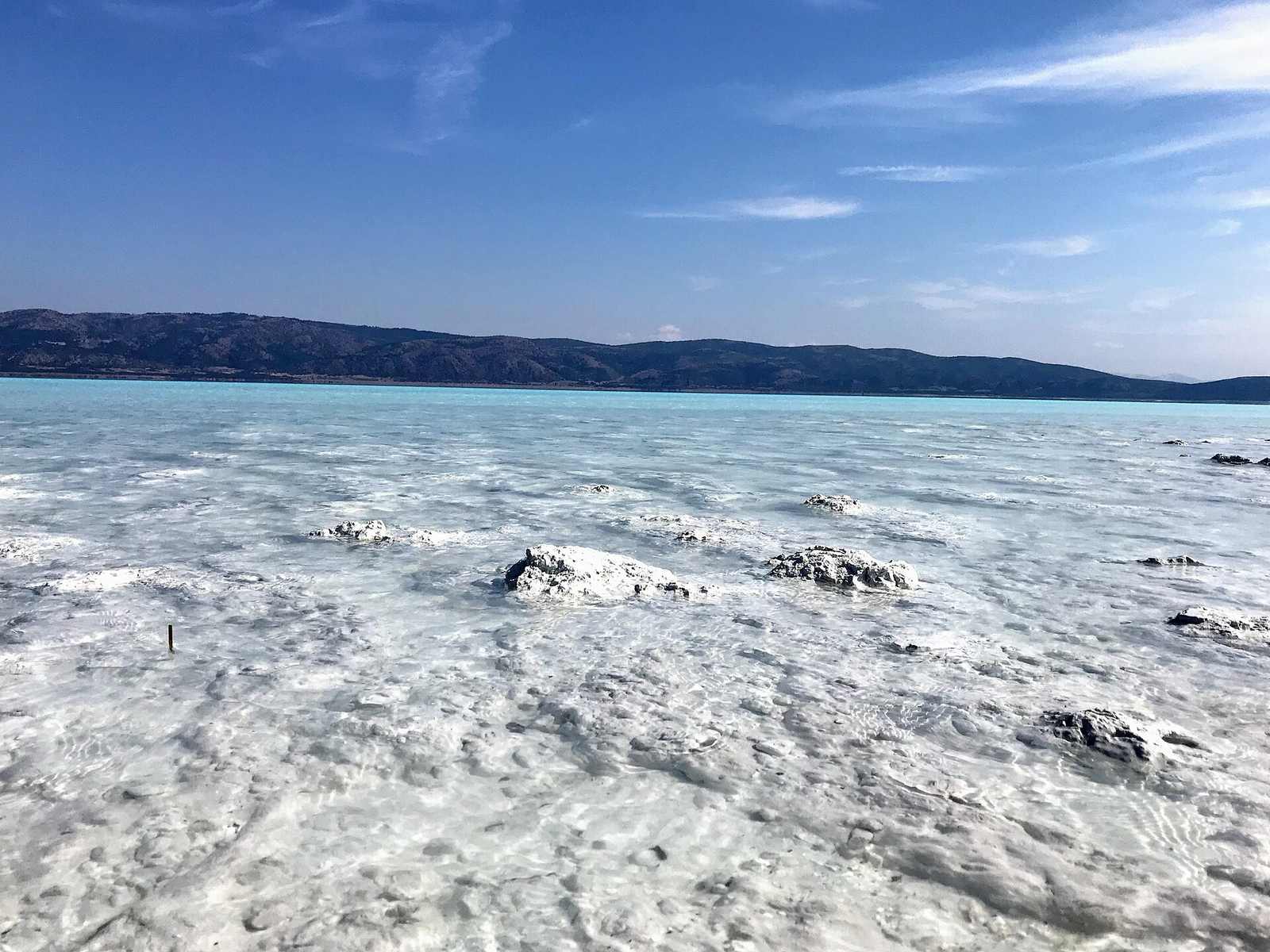
The single most photographed feature of Lake Salda is its shoreline: stretches of brilliant white shore that curve against turquoise water, giving the lake its popular nickname, "Turkey's Maldives." But unlike a tropical beach, none of this whiteness comes from quartz sand. It is hydromagnesite, a magnesium-carbonate mineral that forms naturally where spring water rich in magnesium meets the lake's alkaline chemistry, precipitating out over centuries into a fine, pale crust along the water's edge.
The result is a shoreline that looks almost artificial in photographs — chalky white against saturated blue-green water — but is entirely the product of Lake Salda's unusual geology in Burdur's Yeşilova district. It is one of only a small number of places on Earth where hydromagnesite forms in this concentration, which is part of why the lake attracts both photographers and geologists in equal measure.
Why the Water Looks So Turquoise
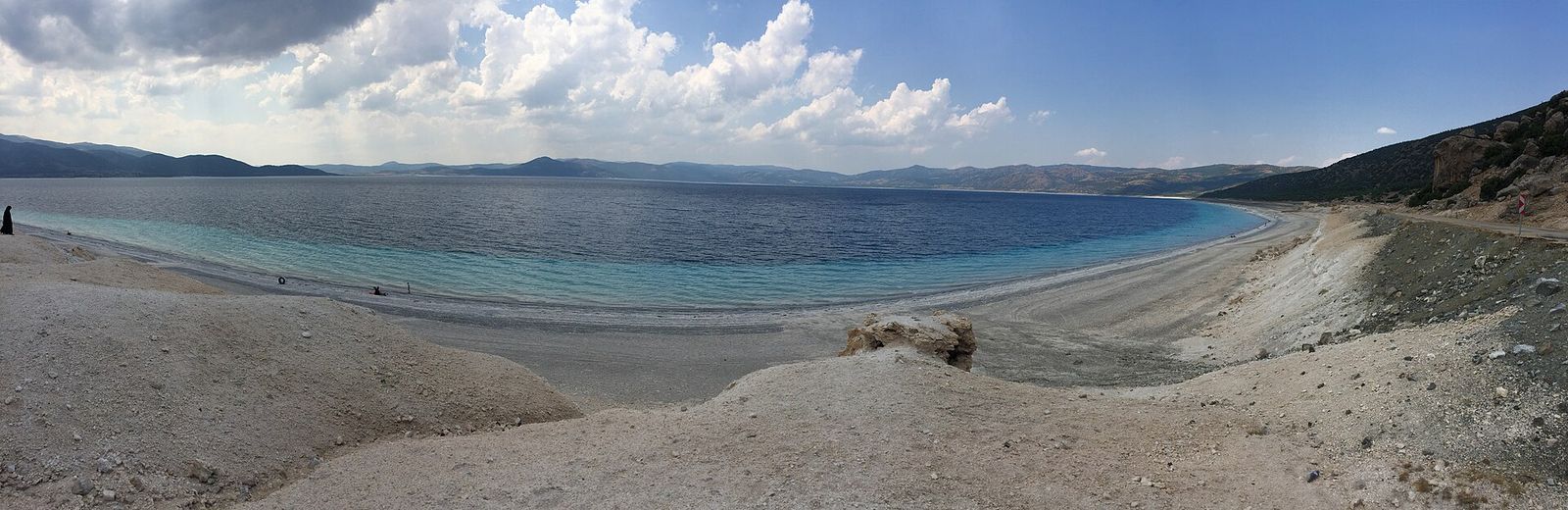
The bright mineral bed beneath shallow water reflects sunlight upward, intensifying the blue and green tones of the lake in a way similar to how pale sand amplifies color in tropical lagoons. Combined with the lake's considerable depth — around 185 meters at its deepest point — Salda shows a striking gradient from pale turquoise near shore to deep cobalt further out, all within view of the same beach. This color contrast is what most visitors come to photograph, and it is at its most vivid on clear, sunny days in the mid-morning or late afternoon, when the sun angle avoids harsh glare on the water's surface.
Where to See the Best White Beaches
Several access points along Lake Salda's shore offer views of the hydromagnesite beaches, each with a slightly different character:
- Main public beach (Yeşilova side) — the most developed access point, with parking, basic facilities, and the easiest walk to the water. This is where most first-time visitors head.
- Beyaz Adalar (White Islands) sector — the most visually dramatic stretch of pure white mineral shoreline, but it is fenced off and protected; visitors can view it from a respectful distance but cannot walk directly on it.
- Quieter coves further along the shore — less crowded pockets of white shoreline reachable on foot from the main beach, popular with visitors looking for a calmer spot to sit or swim.
For directions to these access points and a general layout of the lake, see the Lake Salda map.
Why the Beaches Are Protected
Because hydromagnesite deposits are fragile and slow to reform, uncontrolled foot traffic, off-road driving, and souvenir collecting can quickly erode features that took a very long time to develop naturally. As a result, park authorities restrict access to the most sensitive sections of shoreline and limit swimming to designated zones elsewhere on the lake. These rules protect both visitors — since the lake bed can drop off suddenly in places — and the mineral crust itself, which scientists continue to study.
Simple visitor etiquette makes a real difference here:
- Stay on marked paths and designated swimming areas rather than cutting across protected sections of shoreline.
- Do not collect or remove mineral sediment as a souvenir; it does not regenerate quickly and its removal visibly damages the beach.
- Avoid driving or parking directly on the shoreline; use the designated parking areas near the main beach.
- Pack out all trash, including food wrappers and sunscreen bottles, since there is limited waste collection around the lake.
The Mars Connection
Lake Salda's white beaches are not just a visual novelty — they are also why NASA scientists have studied the lake as an analog for the ancient lakebed inside Mars' Jezero Crater. The magnesium-carbonate minerals that make up Salda's shoreline are chemically similar to deposits detected from orbit inside Jezero, the crater the Perseverance rover has explored since 2021 in search of preserved signs of ancient microbial life. Researchers have used Lake Salda as a real-world site to understand how such minerals form and what they might reveal about Mars' early, wetter history — a genuinely rare distinction for a lake known mainly for its Instagram-friendly color.
Best Time to Photograph the White Beaches
The mineral shoreline photographs best under strong, direct sunlight, which brings out the contrast between the white beach and the turquoise shallows. Midday to mid-afternoon in summer typically gives the clearest, most saturated colors, though early morning light can produce a softer, pastel effect with fewer crowds in the frame. For a full seasonal breakdown of weather, crowds, and water temperature, see our guide to the best time to visit Lake Salda.
To plan your visit around the beaches themselves, including swimming spots and short walks along the shore, check our things to do at Lake Salda guide, or browse more images in the photo gallery.